
You Deserve a Breath of Fresh Air®
Your Choice for Advanced Sinus & Sleep Care
Hillcrest Medical Building Atrium
6770 Mayfield Rd, Suite 425
Cleveland, OH 44124
800-24-SINUS (247-4687)

Sleep & Snoring Treatments
Snoring and some cases of mild to moderate sleep apnea can be successfully treated in several ways, including behavior modifications (weight loss, smoking cessation) and several in-the-doctor's-office procedures including the latest technologies of radiofrequency stiffening of vibrating tissues (Coblation™). Some patients are candidates for a retainer like device (oral appliance) for managing snoring and sleep apnea without surgery.
Post-Op Instructions for Snoring Surgery
Post-Op Instructions for Sleep Apnea Surgery
Obstructive Sleep Apnea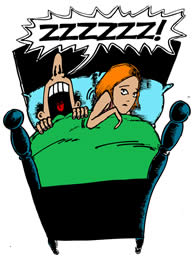
What is obstructive sleep apnea?
Obstructive sleep apnea (where breathing periodically stops or is shallow) is an unsuccessful attempt to breathe through the nose and/or mouth.
Patients with obstructive sleep apnea are troubled by periods of apnea (when breathing stops) during which the blood's oxygen levels drop. This may result in serious physical problems including high blood pressure, lung insufficiency, stroke and heart problems such as abnormal heart rate and rhythm.
Obstructive sleep apnea can deprive you of oxygen which causes you to also be deprived of "deep" sleep. You may then be sleepy much of the day, and may even fall asleep while driving, or on the job.
How is snoring treated?
A physician must determine whether sleep apnea is your problem. The solution may be as simple as managing a nasal allergy or infection, or reshaping the soft palate using radiofrequency energy or by stiffening the soft palate with an implant. Treatments are often performed in the physician's office, uses exacting technology to reduce the snoring. If the problem is nasal blockage office treatments can reduce the obstruction and to make it easier to sleep.
Learn About Howard L. Levine MD
 Howard L. Levine MD is one of the pioneers in the development of advanced nasal endoscopic diagnostic techniques, functional endoscopic sinus surgery and advanced applications of radiofrequency energy for nasal and sinus disease. Listed in The Best Doctors in America and Top Doctors in Cleveland, Dr. Levine is world-renowned as an expert in nasal and sinus disorders. Dr. Levine, is a past national president of the American Rhinologic Society (ARS), the world’s largest organization in nasal and sinus disorders.
Advanced Treatments
 The cornerstone of Cleveland Nasal Sinus & Sleep Center is our connection to the “latest and greatest” technology that provides to our patients the best outcomes with the least trauma. Howard L. Levine MD is and has been a consultant and primary investigator for several ear, nose and throat medical device companies.
Nose News....is Good News®!

Cleveland Nasal Sinus & Sleep Center has a new location!
Hillcrest Medical Building Atrium
6770 Mayfield Road, Suite 425
Cleveland, Ohio 44124.
Telephone: 440-684-9980.
This new facility within the Hillcrest Medical Building Atrium, has adjacent free parking, valet parking, access from a major interstate highway, affordable accessible hotels and motels and nearby shopping centers
Read More...