You Deserve a Breath of Fresh Air®
Your Choice for Advanced Sinus & Sleep Care
Hillcrest Medical Building Atrium
6770 Mayfield Rd, Suite 425
Cleveland, OH 44124
800-24-SINUS (247-4687)

Septoplasty
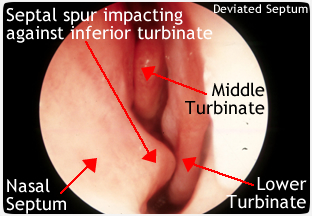
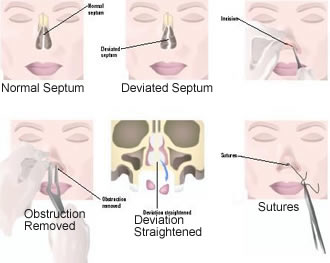
Septoplasty is a surgical procedure to correct the shape of the septum of the nose. The nasal septum is the separation between the two nostrils. In adults, the septum is composed partly of cartilage and partly of bone. Sometimes an extra piece of bone will grow out from the septum and create a spur. The goal of this procedure is to correct defects or deformities of the septum that can cause nasal obstruction or even sinus problems. Septal deviations are either congenital (present from birth) or develop as a result of an injury.
Septoplasty is needed for:
- chronic and uncontrolled nosebleeds
- nasal septal deformity
- nasal air passage obstruction
- obstructive sleep apnea
- sinus headaches caused by septal spurs
- chronic sinusitis associated with a deviated septum
- turbinate surgery
- polypectomy (polyp removal)
- as part of sinus surgery
- tumor excision
Learn About Howard L. Levine MD
 Howard L. Levine MD is one of the pioneers in the development of advanced nasal endoscopic diagnostic techniques, functional endoscopic sinus surgery and advanced applications of radiofrequency energy for nasal and sinus disease. Listed in The Best Doctors in America and Top Doctors in Cleveland, Dr. Levine is world-renowned as an expert in nasal and sinus disorders. Dr. Levine, is a past national president of the American Rhinologic Society (ARS), the world’s largest organization in nasal and sinus disorders.
Advanced Treatments
 The cornerstone of Cleveland Nasal Sinus & Sleep Center is our connection to the “latest and greatest” technology that provides to our patients the best outcomes with the least trauma. Howard L. Levine MD is and has been a consultant and primary investigator for several ear, nose and throat medical device companies.
Nose News....is Good News®!

Cleveland Nasal Sinus & Sleep Center has a new location!
Hillcrest Medical Building Atrium
6770 Mayfield Road, Suite 425
Cleveland, Ohio 44124.
Telephone: 440-684-9980.
This new facility within the Hillcrest Medical Building Atrium, has adjacent free parking, valet parking, access from a major interstate highway, affordable accessible hotels and motels and nearby shopping centers
Read More...